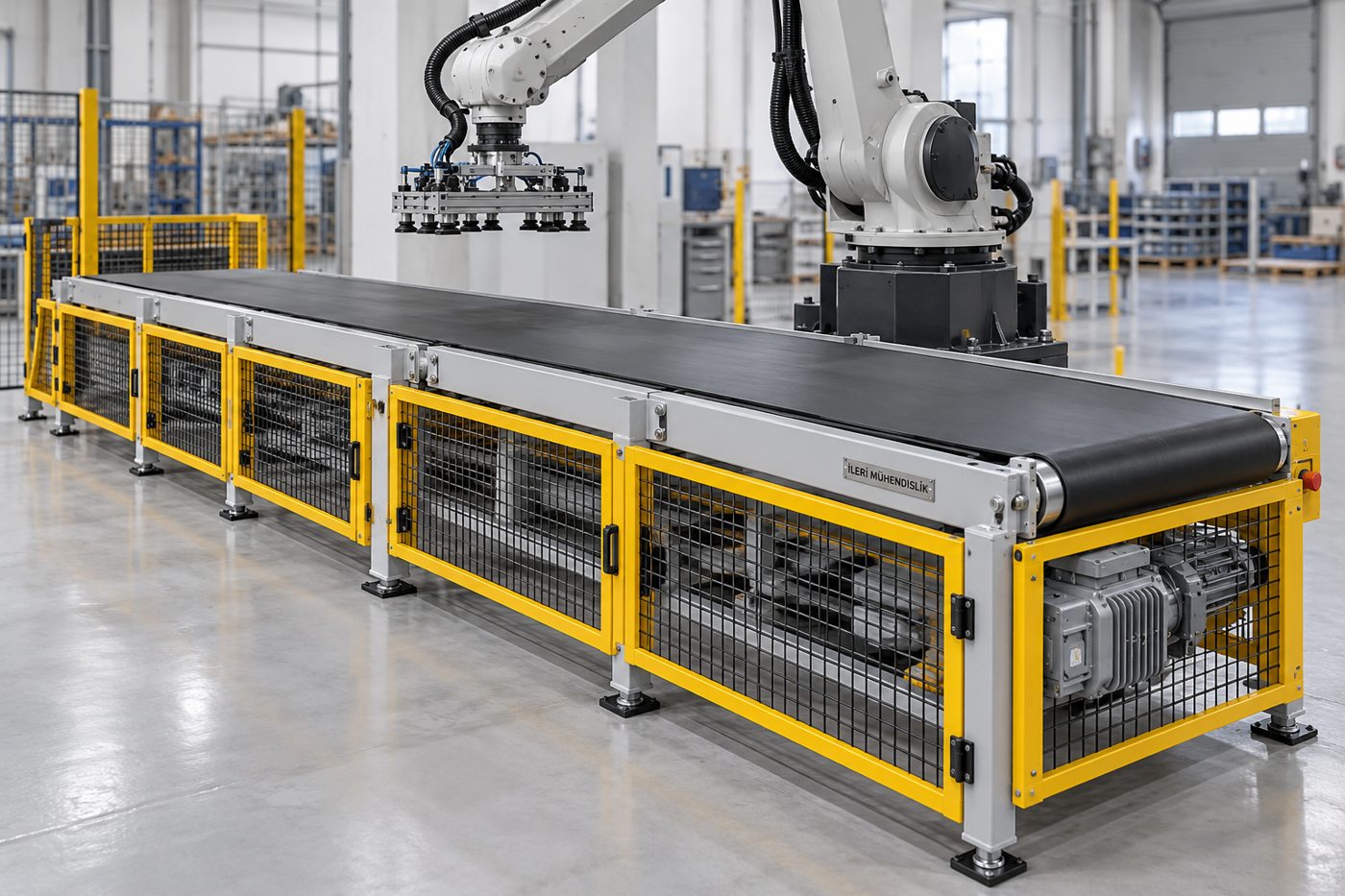
Robot Altı Bariyerli Konveyörler
The six-barrier robot carrier
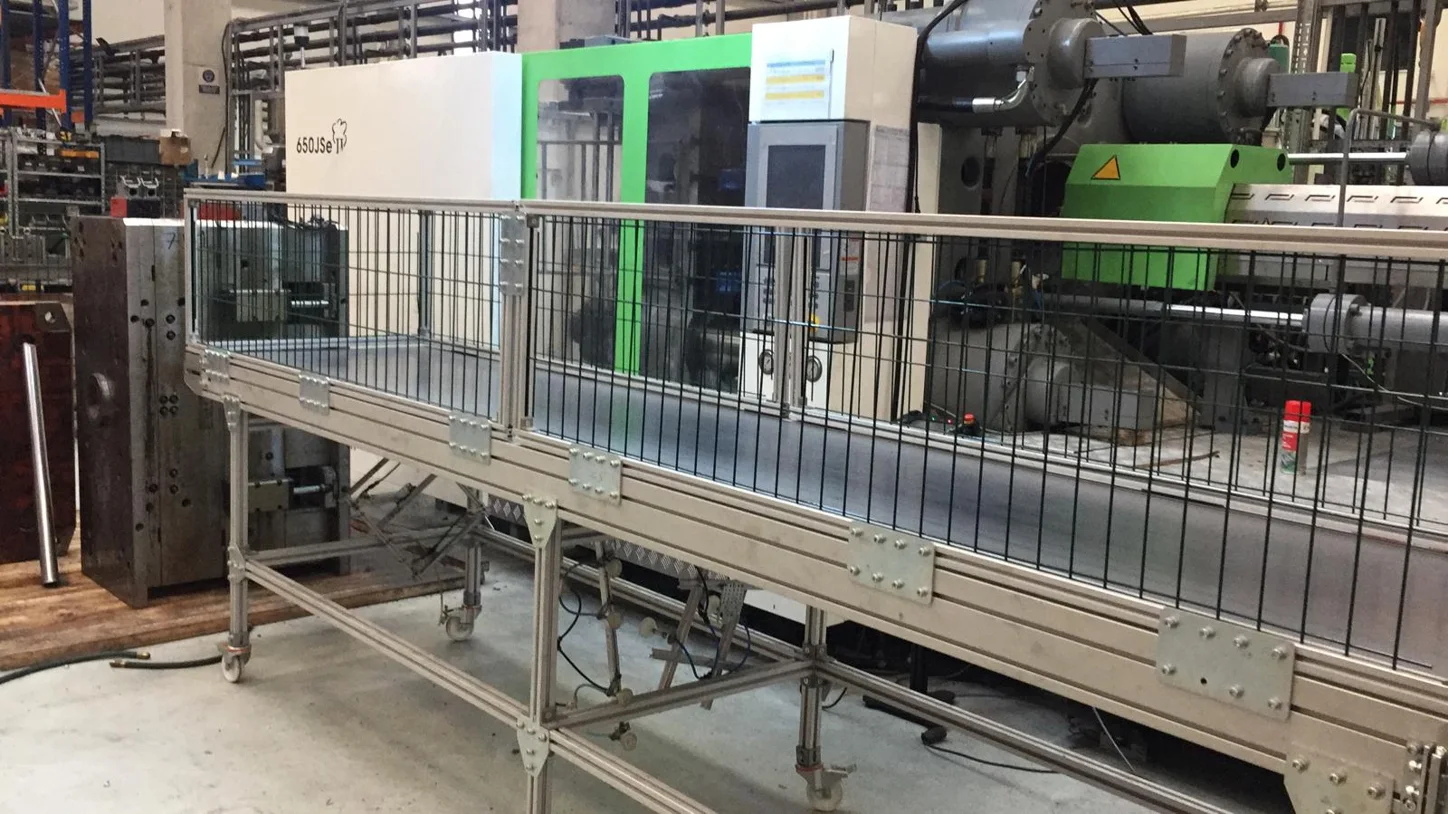
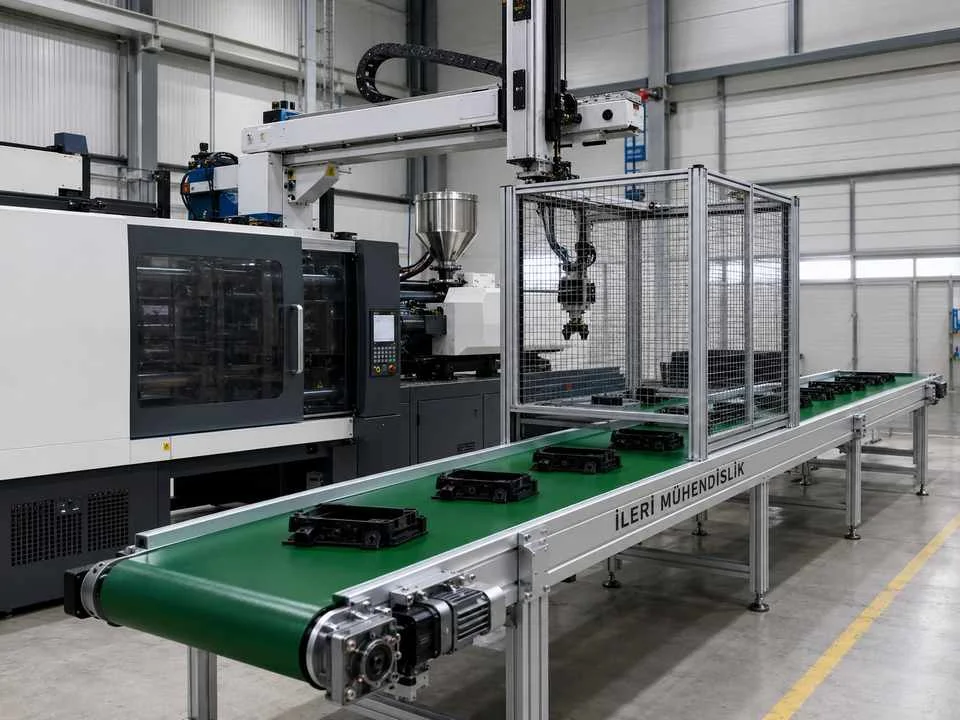
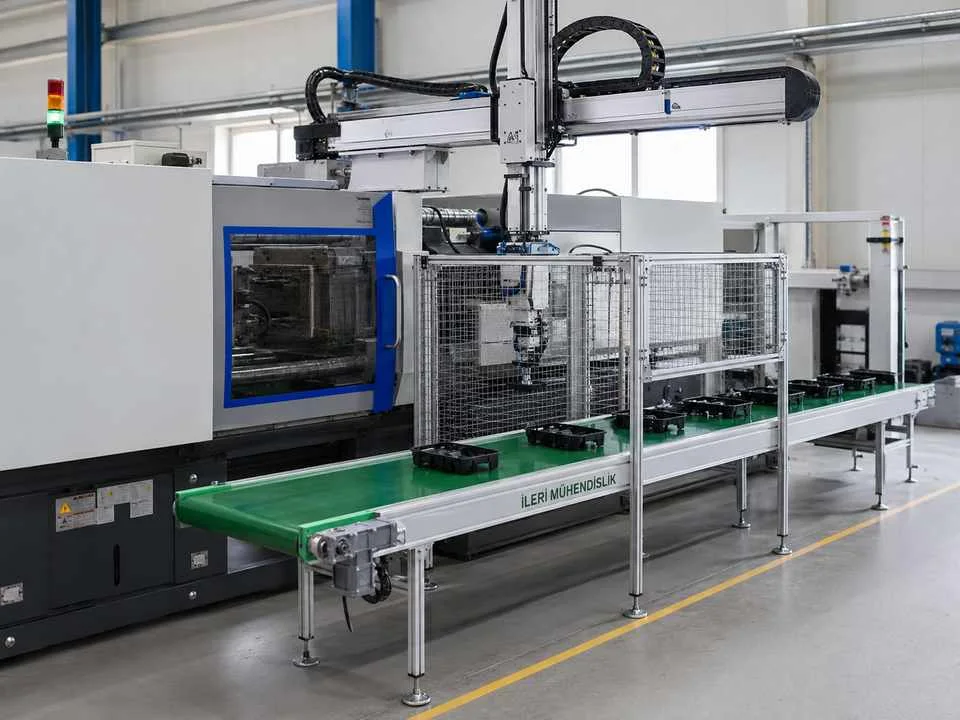
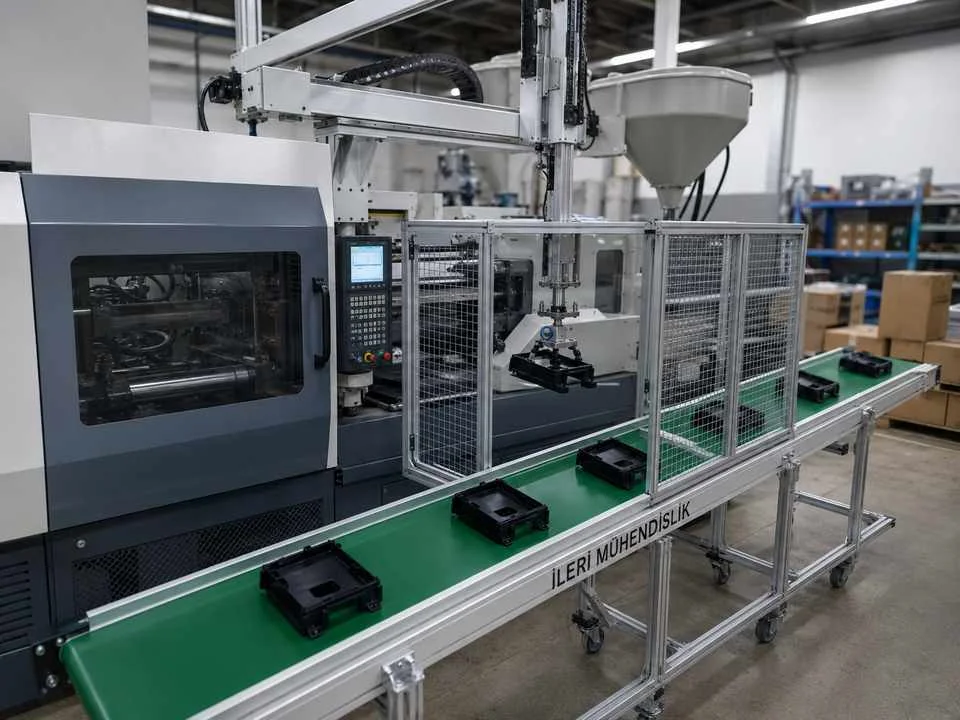
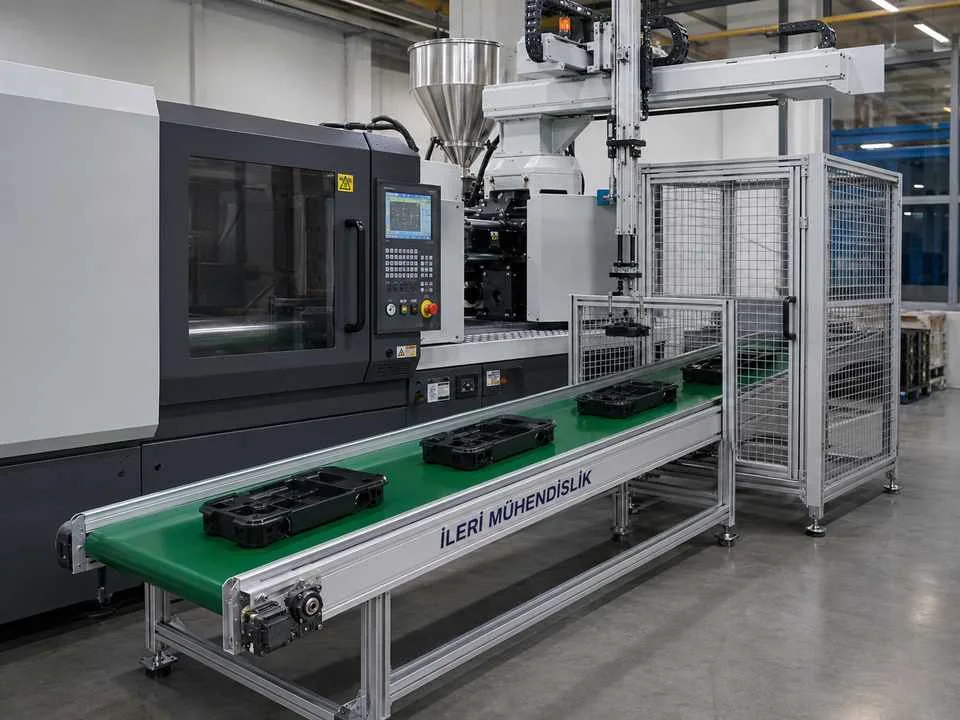
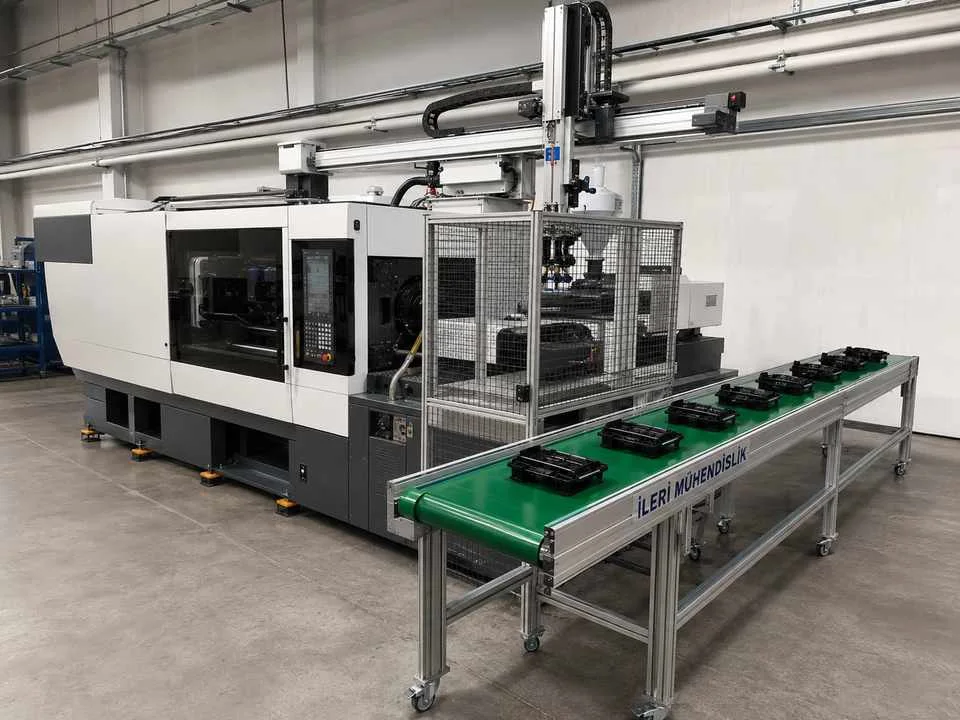
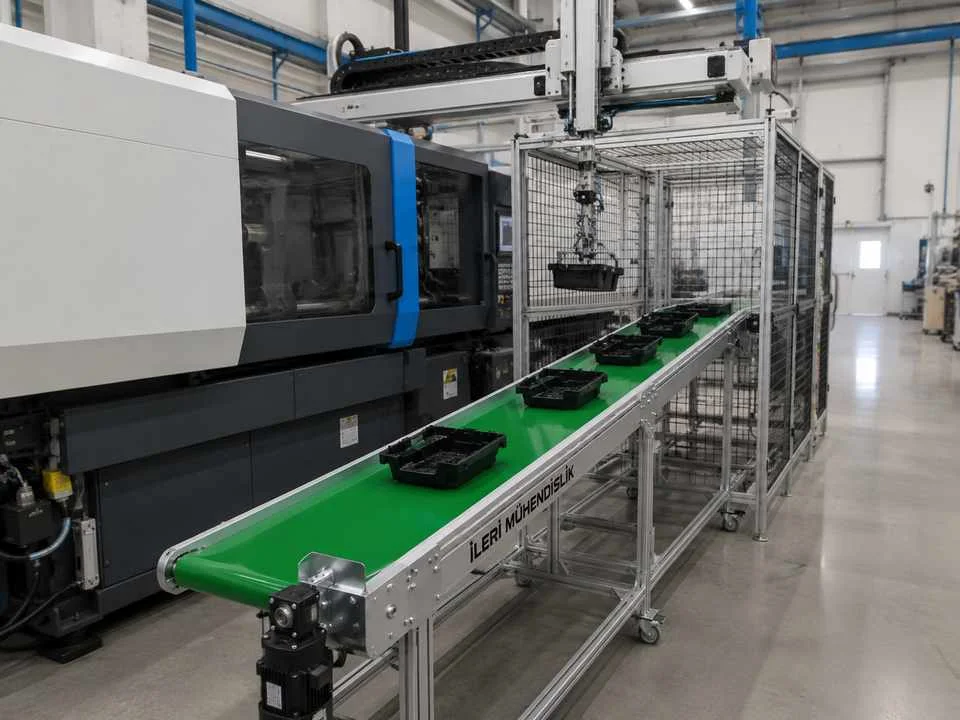
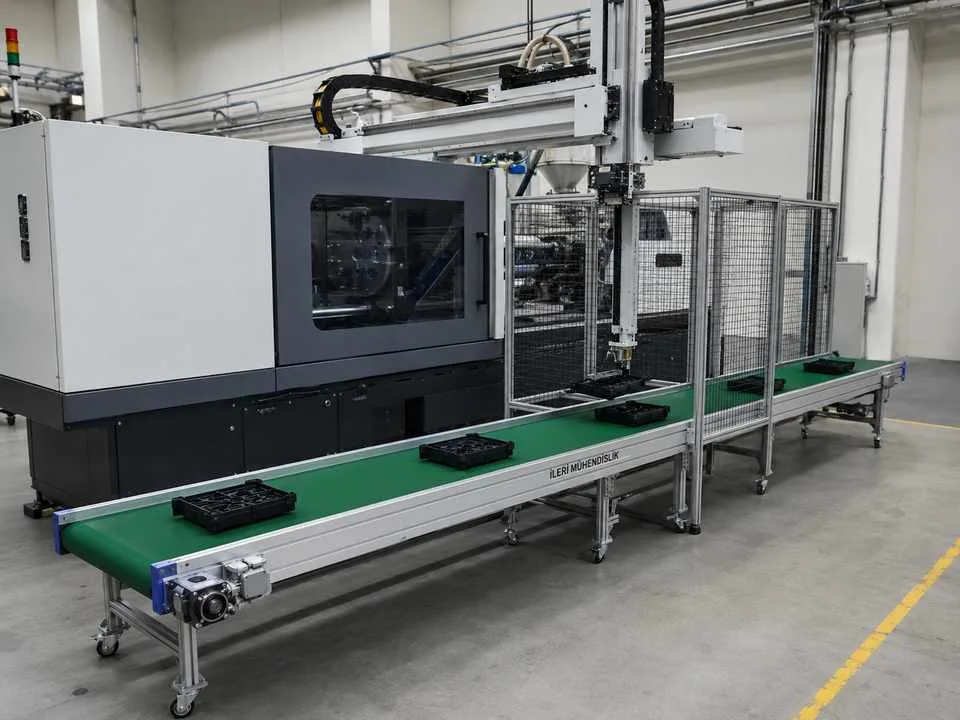
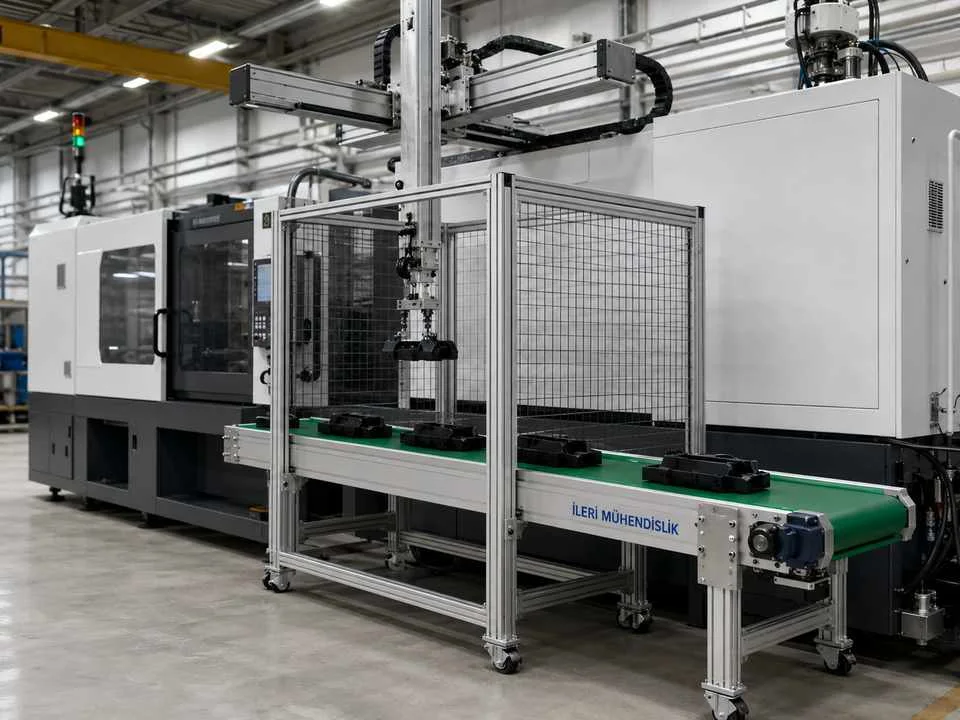
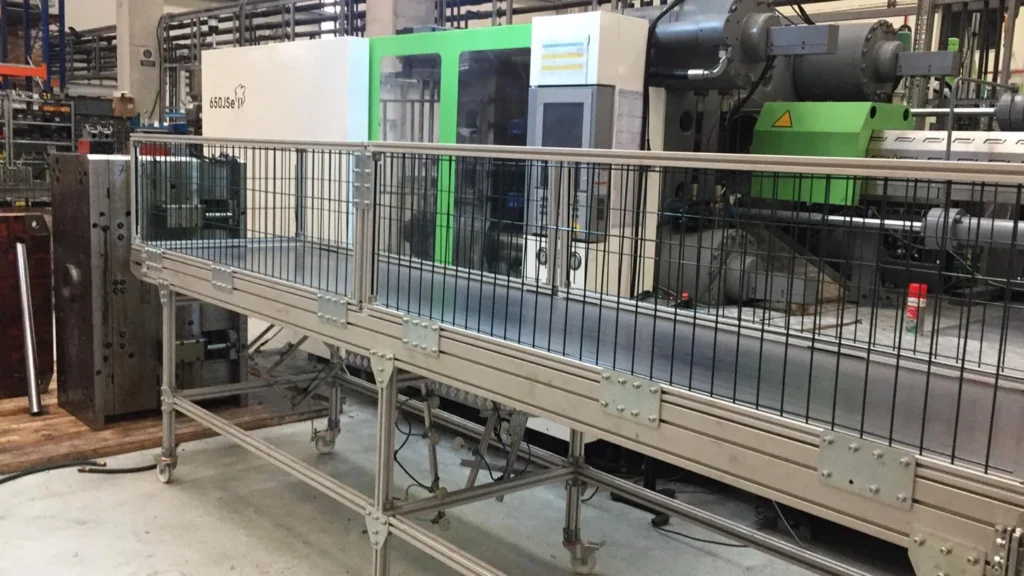
Robot subbarrial carriers keep the parts that the robot leaves in a specific transport area and transfer to the collection or sub-processing point. In the injection production and in the robot parts receiving cells, bandwidth, leaving position and side barriers are selected together. Advanced Engineering assesses the carriers' position along with the approach path of the robot and the behavior of the product on the band. The goal is to ensure the piece is progressing regularly from the point to the output.
Robot six-barrier carrier
The point where the robot leaves the product must be matched with the available area on the band. It is important not only the external size of the piece, but also the direction and the band contact form it takes when leaving the hold. If several pieces are left in a circle, the total area covered by the pieces is determined. If the products are not to come up or not to contact each other, the layout of leaving and the distance of progress must be determined together.
The way the holder is also checked when it is pulled back after the product is left. The side barrier, the sensor or the upper connections should not collide with this field of movement. If the robot needs to leave pieces to different points for different patterns, all work positions are assessed. When the carrier's position is changed, the drop points in the robot program must also be re-checked.
Barrier height and net transport width
Barriers are the product direction elements that limit the part to get out of the band. The heights and internal openness are determined by the product's shape, the possibility of jumping and the access of the robot. The high barrier is not more suitable in every application; it can make it difficult for the holder to approach or the operator to get the product at the output. The usable band width should be assessed by removing the area that the barriers cover inside.
It is important that thin parts or output from the product do not enter the band and the barrier. The geometry of side spots should be checked by the product sample. Round, unbalanced or high parts can move on the basis of the barrier; it is studied whether this contact creates trace on the surface. If the barrier connections are requested to be adjustable, the setting range and fixation method are included in the order range.
The band surface and the hot piece theme
The band contact temperature and time for the parts that come out of the injection should be known. The chosen band must be in the character that meets the product surface and the working environment. The temperature that the piece reaches the carrier with the output temperature from the model may be different. The band material and if there is, the limits of use of the coating, carrier profile or side elements are compared to the real conditions.
The surface may need to be left controlled instead of the sensitive parts free of fall. The fall distance, the product weight and the band support affect the shock behavior. The one-sided seating or turning of the product on the band may create unwanted drilling. The way of leaving the hold, the transport surface and the direction in which the product should be located at the next station should be handled together.
Robot Circuit and Conveyor Movement
The carrier can continue to move forward or after each robot turn can make a specific transportation movement. It depends on the product range, the time of turn and the collection order in the output which the method is suitable. If the band is asked to leave the piece while standing, the position and the rework order are clearly defined. The robot and the carrier are ready, the piece is left and the error information is addressed in the control design.
The location of the product detection sensors is determined by the geometry of the piece. Small, hole or different colored pieces may create different detection conditions in the same sensor order. The line should be behaved when the box is filled or when the product is not taken. Uncontrolled accumulation, as the newly left parts may cause collision with the existing products, the position scenario is prepared along with the mechanical settlement.
Cell settlement and access to care
The carrier barriers that direct the product do not replace the robot cell's staff protection system. Cell entrance and output, operator access and protective arrangement are assessed throughout the system. The point to be taken by the carrier outside the cell should be clearly indicated. The safe intervention conditions are also planned when the barriers or reserves need to be opened for maintenance purposes.
Band tension, enough space for access to the tambours and sensors is left. The accumulation of parts on the barrier edges, relaxing connections or band tracking problems should be checked regularly. If the carrier is wheeled, it is important to fix the work position and maintain the balance with the robot. After each place change, the mechanical settlement and leaving position should be properly checked.
The price of the robot six carrier
For the offer, the bandwidth, the length of transport, the work height, the robot leaving point and the movement area of the holding must be shared. The product measurements, weight, temperature and the time of circulation are other basic information. The barrier height, settings options, sensors and the control communication with the robot impact the price. The crop showing the cell settlement helps the product and holding photos prepare the right coverage.
Frequently Asked Questions
Can the barriers be fixed later? The need for setting can be set up by the right connection layout. The access of the robot and product spaces in the new location must be re-controled.
Can the carrier stop in every circle of the robot? The order of movement, product range and necessary communication signals must be predefined.
Can different parts be moved on the same carrier? The band, barrier and detection conditions of the products should be provided together. The measurements and forms of the different parts should be shared in the selection stage.
The existing product information
| The product | Robot Altı Bariyerli Konveyörler |
| The basic function | Don’t carry the parts that the robot leaves by limiting by side barriers |
| Area of Application | Robot injection and particle-reception cells |
| Information needed in the election | Robot movement area, stop point, barrier height |
| Technical control point | The barrier alone does not replace the cell security system. |
Ask about this product or application
Product images