
The rubber container roll
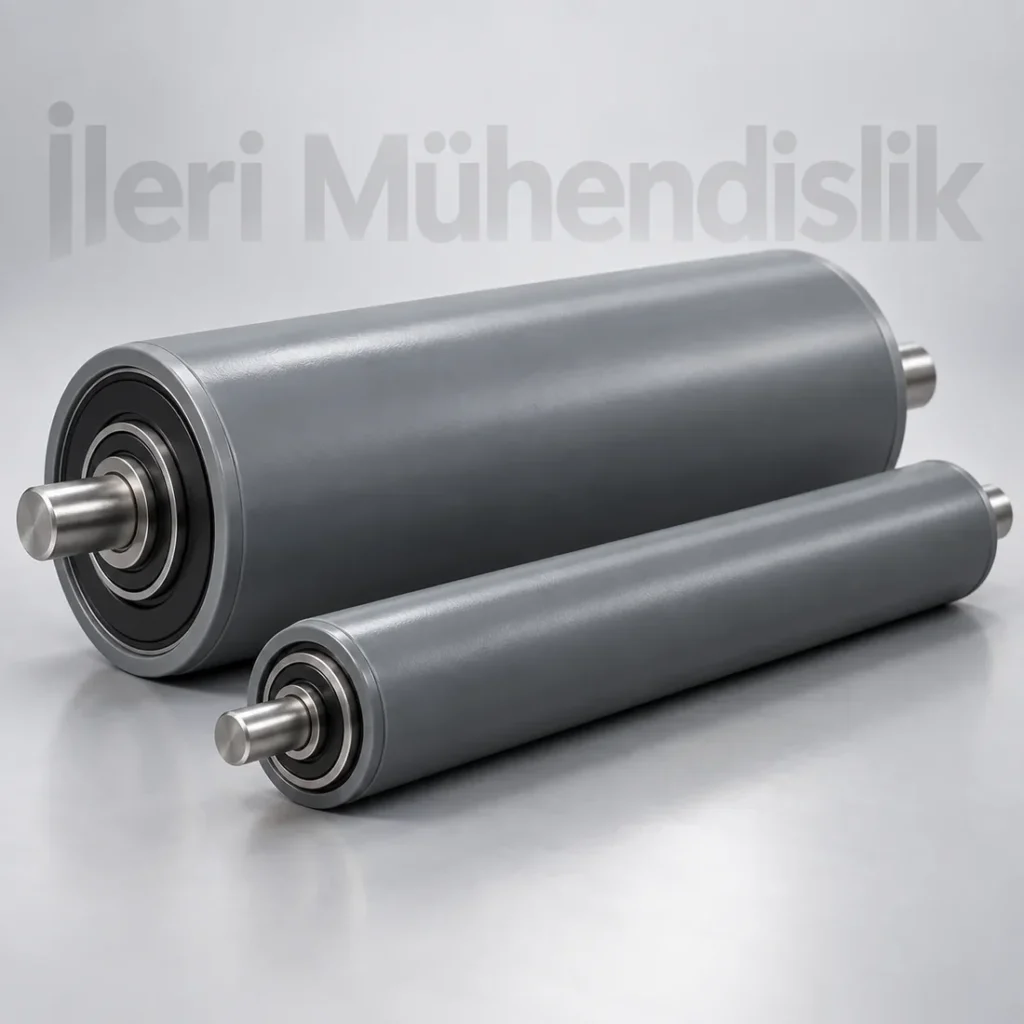
The visual gallery of the rubber-covered carrier roll
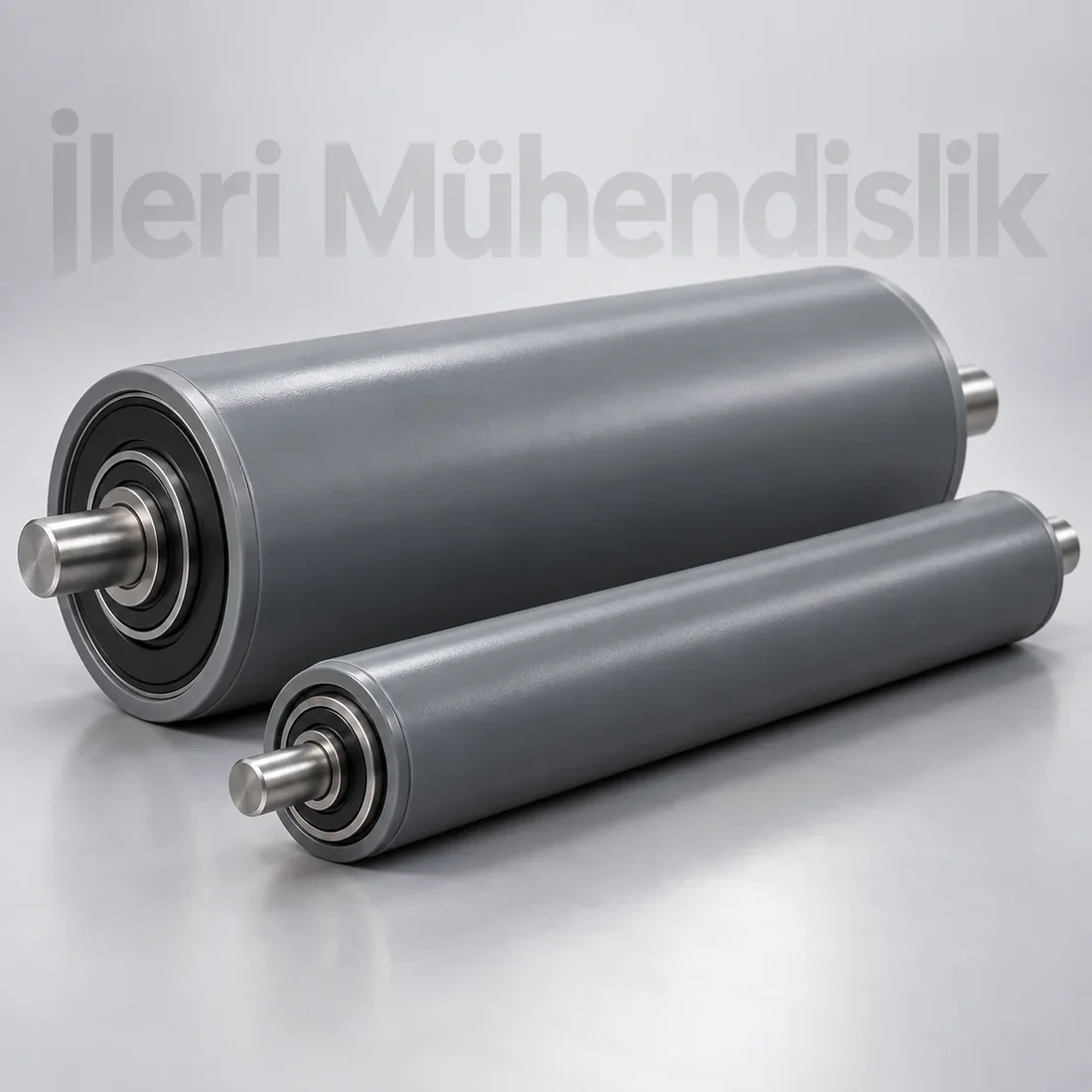
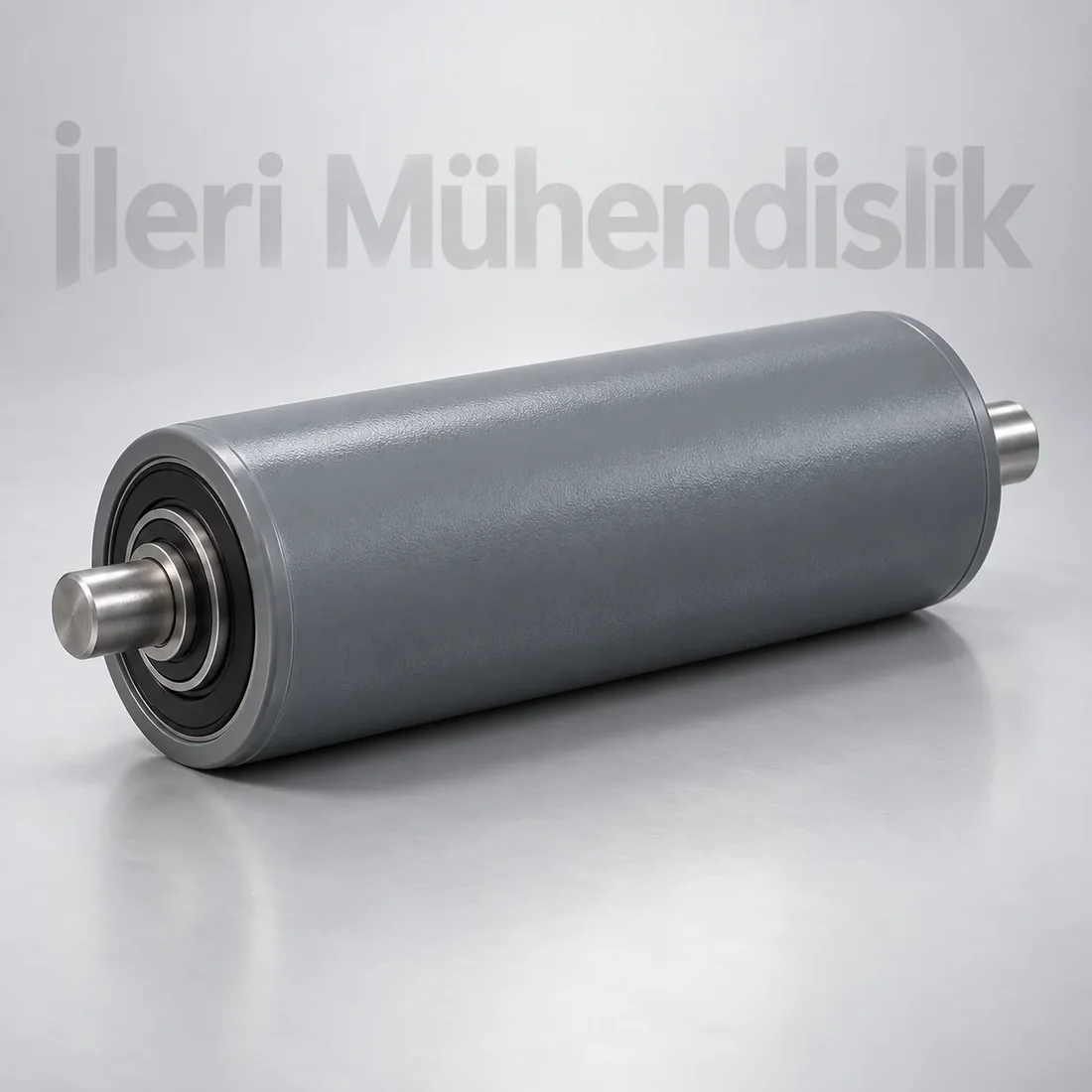
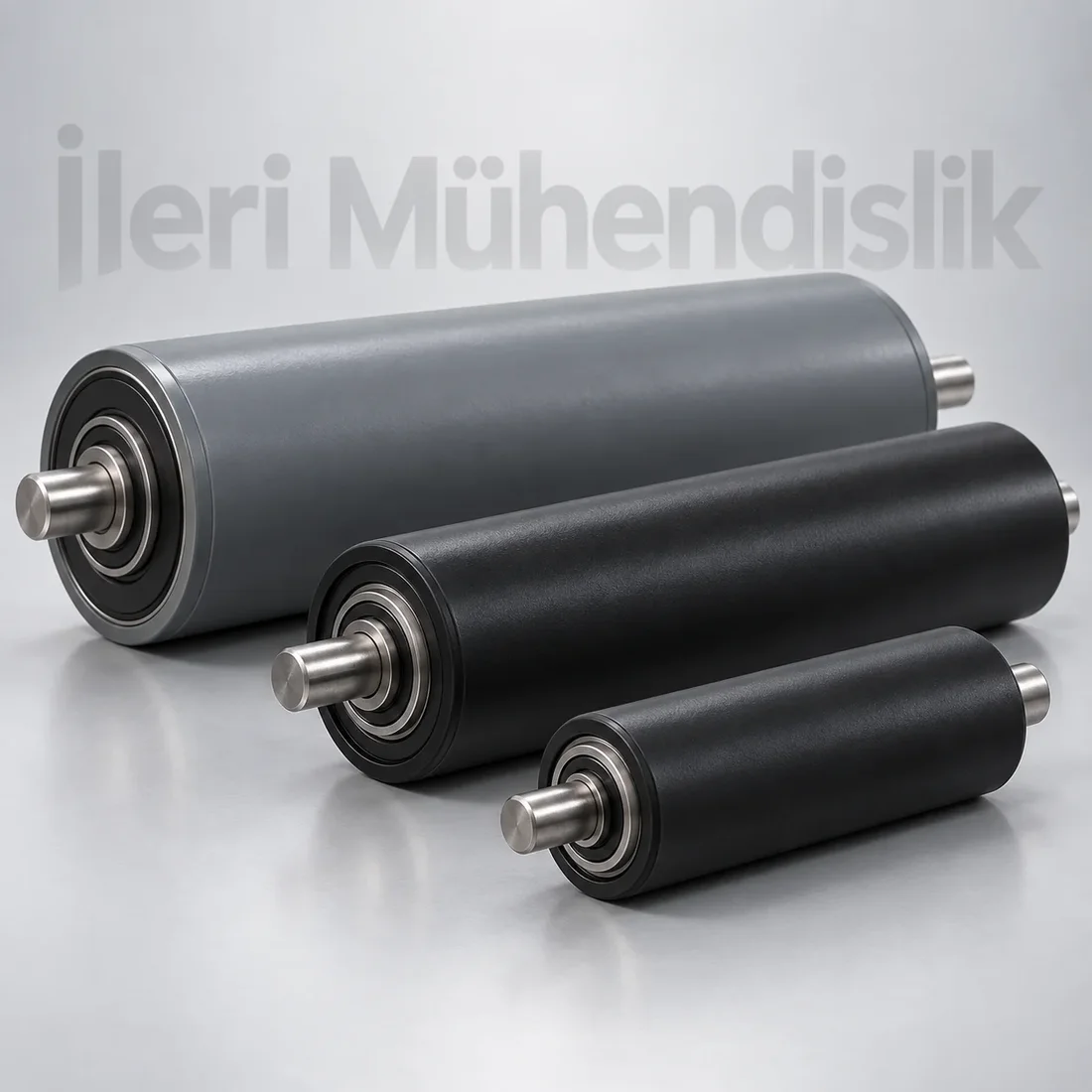
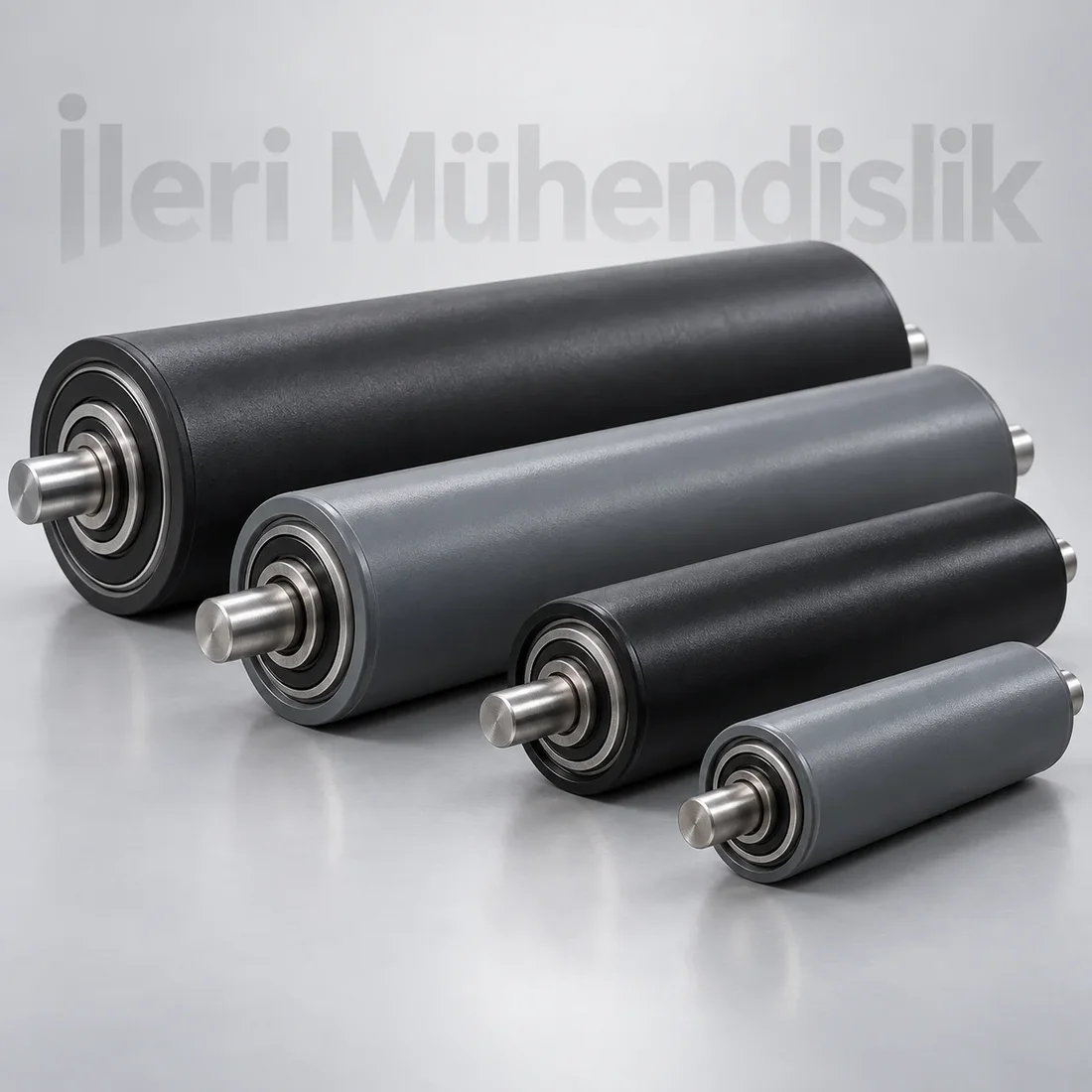
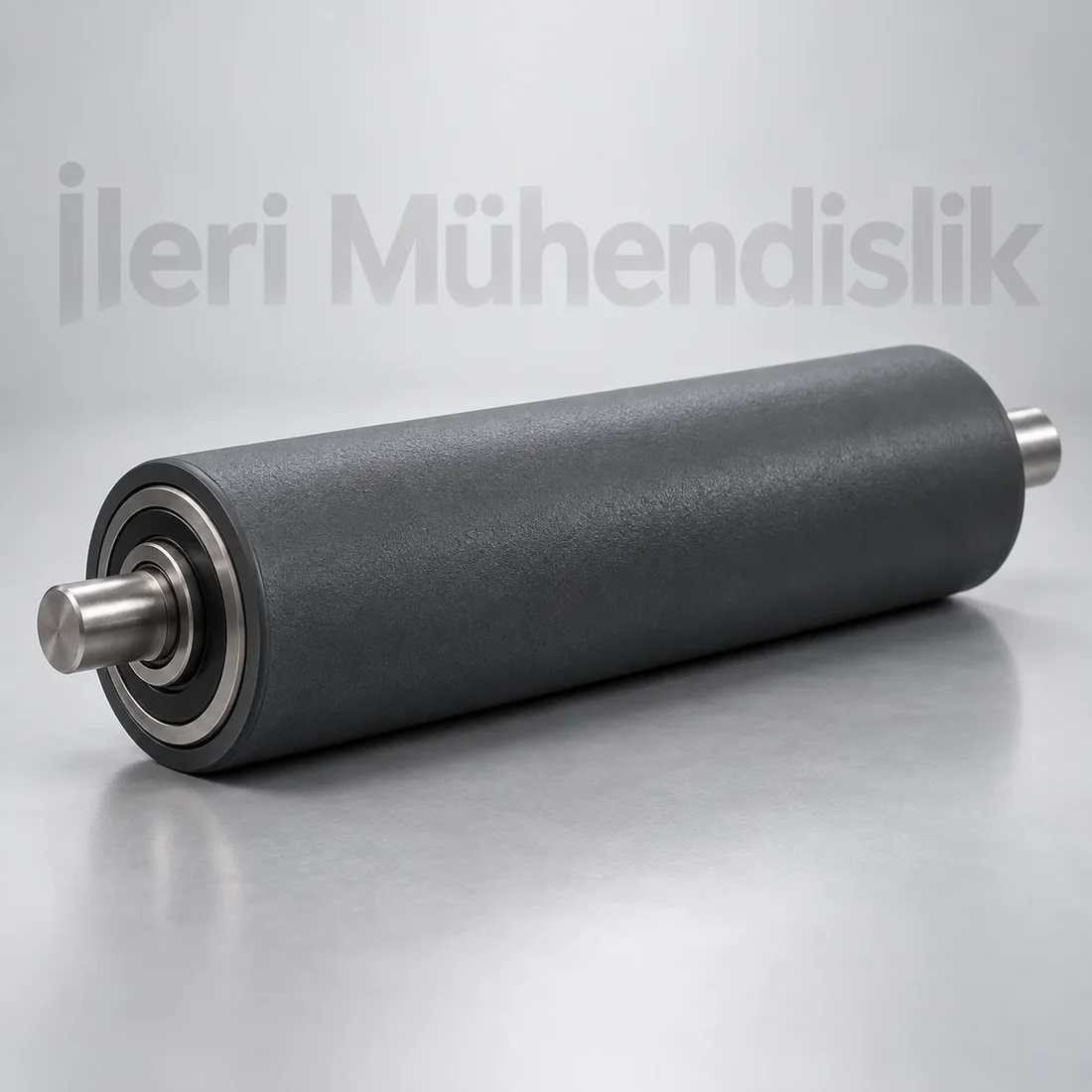
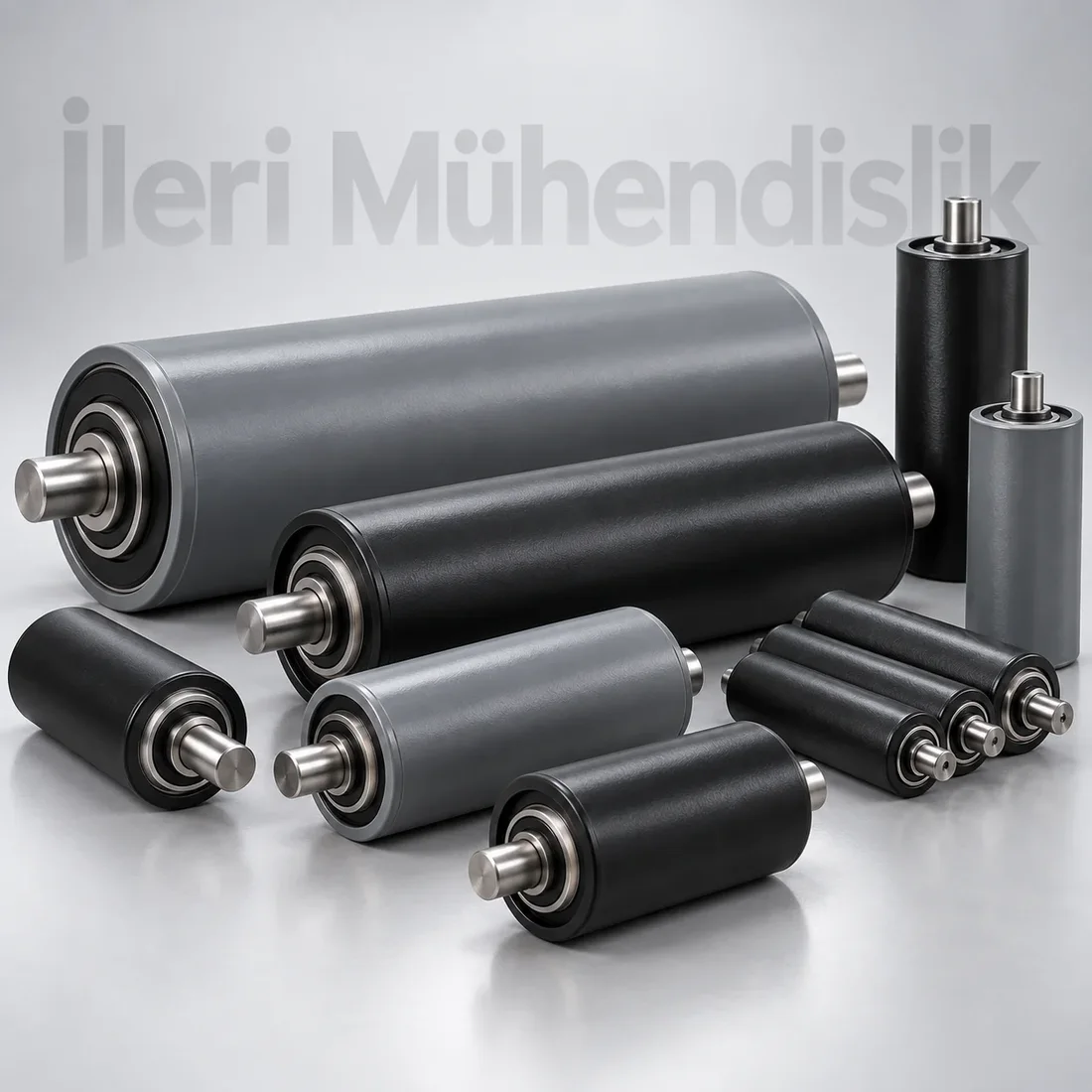
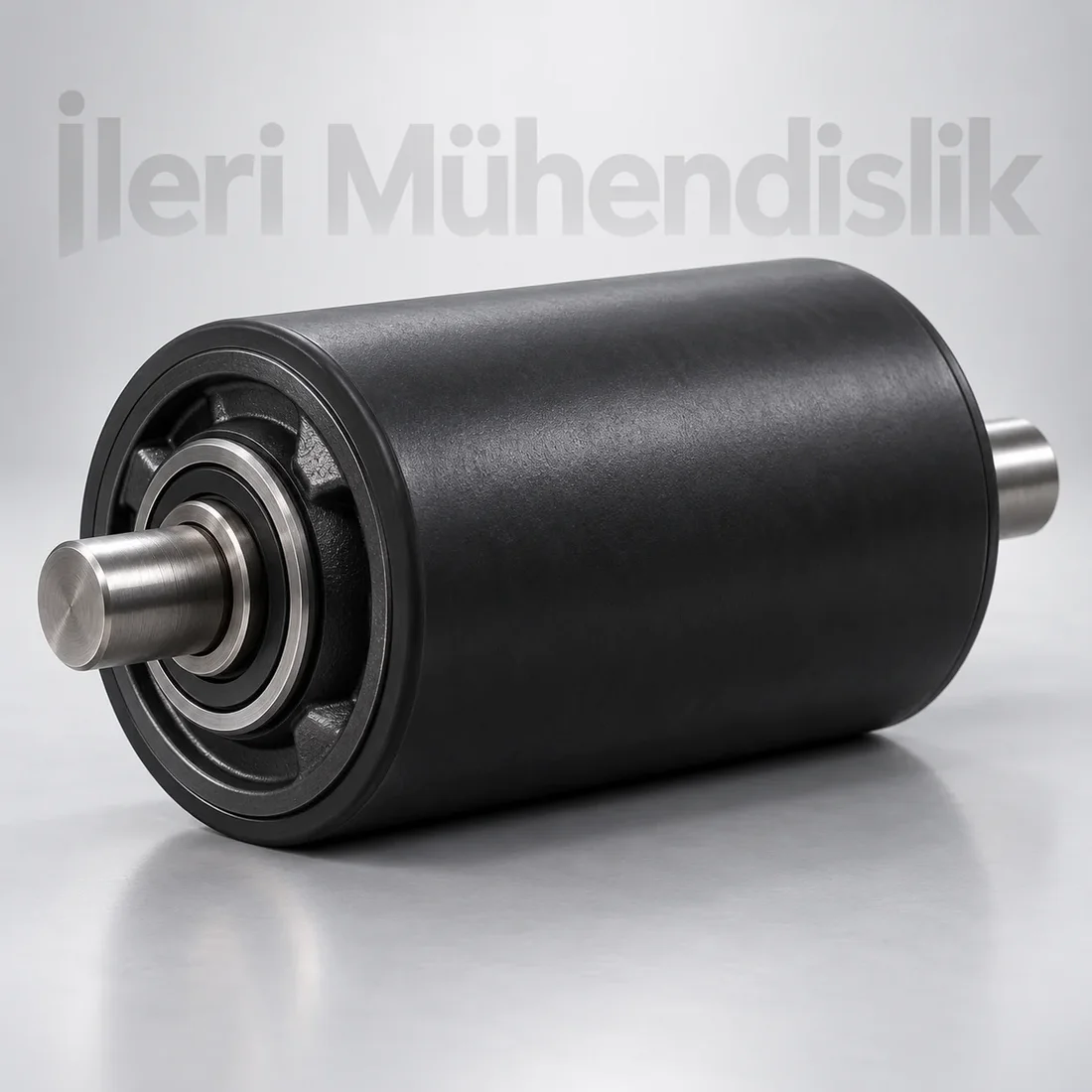
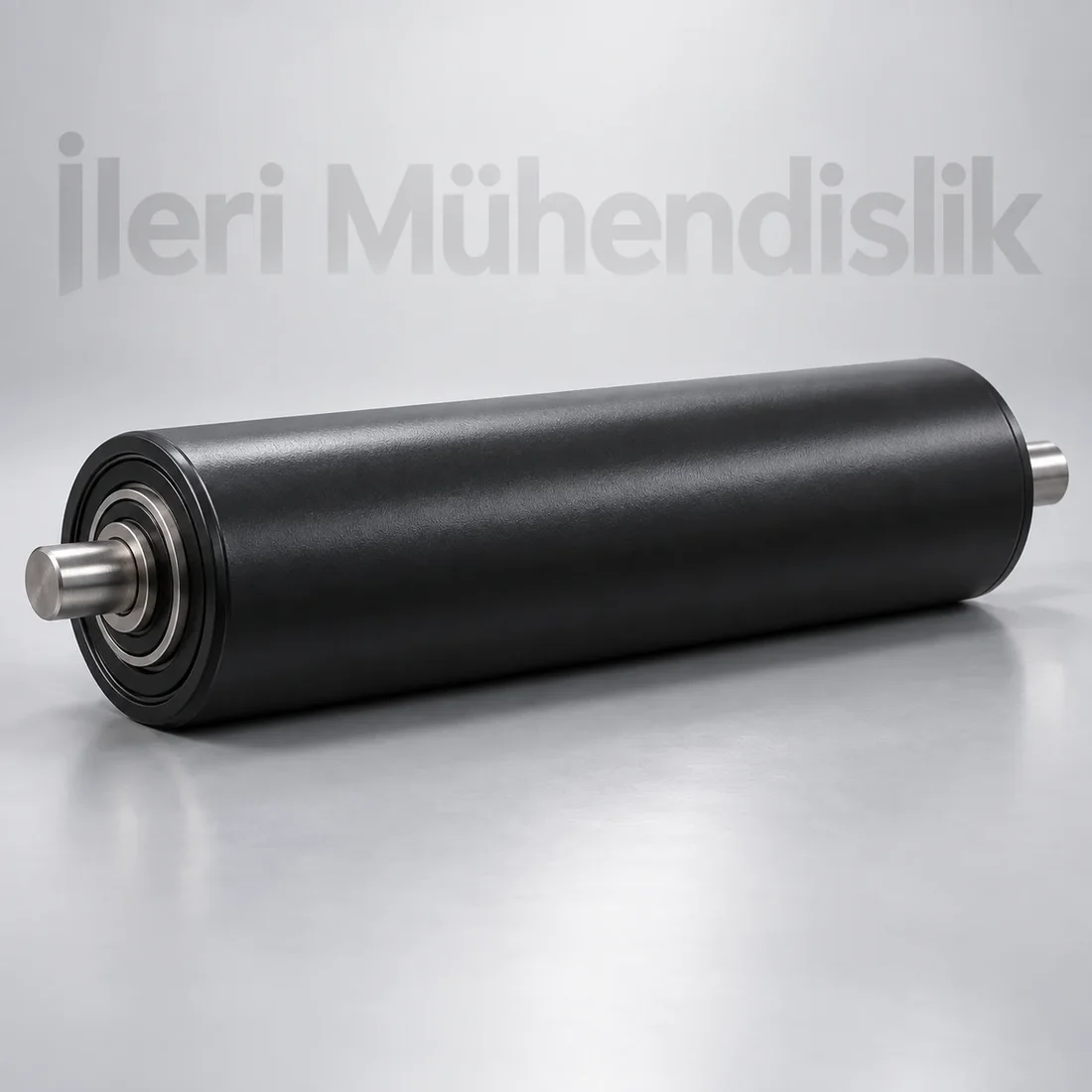
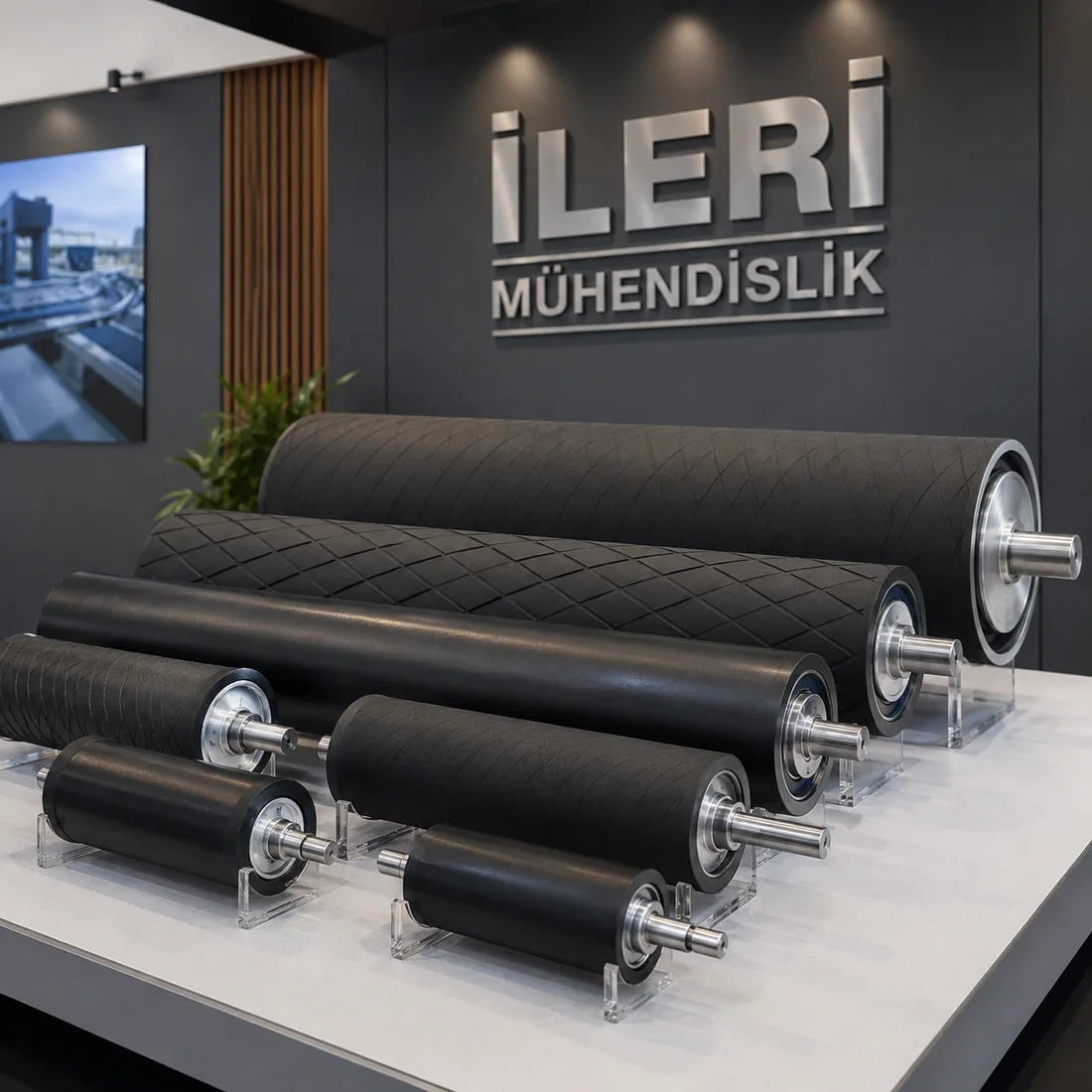
Gum Covered Conveyor Roll — Gum surface changes the contact between the metal body and the product. Cover thickness and hardness; the product's surface, the need for holding and the working environment are assessed.
The rubber covered carrier roll It is a special carrier roll in which the roll body is covered with rubber material in order to increase the twist between the product and the roll, to reduce the blow, to reduce the sound or to protect the surface of the carried product. The rubber body can be covered with rubber in different hardness and thickness depending on the application on the galvanized, steel, stainless or different roll bodies.
What is the rubber-covered carrier roll?
In the rubber-covered carrier roll, an elastomer-based coating is applied to the external surface of the main carrier roll body. Thus the product does not directly contact the metal surface. Coating can help reduce the blow and vibration during transportation, increase the holding and preserve the sensitive surfaces.
The type, hardness and thickness of the cover must be selected according to the weight of the product, surface structure, working temperature and environmental conditions.
Where is the rubber-covered carrier roll used?
Gum-covered rolls can be used in systems where the direct contact of the metal roll is not desired or where a higher holding is required.
- Precision surface product transport lines
- Metal Part Transfer Systems
- Glass and similar surface sensitivity
- Coli and box transportation lines
- The roulette carrier
- Systems where the risk is
- Applications that require reduction of the blow and vibration
- Transportation lines that are important to reduce noise
- Special Machinery and Automation Systems
Why is rubber covering used?
The twist between the product and the roll in standard metal rolls may remain insufficient in some applications, especially in the curved carriers or in the fast-function systems, the roll of the product may not be required.
Gum covering can help the product to progress more controlled on the roll by providing a higher drilling than the metal surface.
The rubber covered roll
The elastic structure of rubber material can absorb a part of the blow that occurs when the product is left on the roll. This feature may be useful especially in applications where metal pieces, box or heavy products fall into the carrier.
But in high impact loads, only covering may not be enough. the rolling tube, the mile, the rolling and the shase capacity should be controlled according to the impact that will also occur.
How to choose the rubber cover thickness?
The thickness of the cover should be determined according to the purpose of use. Though thin coverings may be sufficient for surface protection and a slight increase in drainage, thicker covering may be preferable in applications that require a blow absorption or high holding.
As the coating thickness increases, the total outer diameter of the roll also increases. Therefore, if used in the existing carrier system, the final roll diameter must be considered.
Why is rubber hardness important?
The rubber hardness directly affects the behavior of the roll in contact with the product. The softer rubber surface can be more flexible and high holding. The harder rubber can be advantageous in terms of stretching and shape protection.
The right hardness should be selected according to the product weight, contact pressure, work speed and environmental temperature.
The rubber covered avare carrier roll
Idler Conveyor Roller The highest surface holding in manual or ground-tracking systems can be achieved by applying rubber coating.
This structure can provide advantage on curved lines or in applications where the product’s uncontrolled shift is unwanted.
The rubber covered chain tooth conveyor roll
Motor and heavy cargo transportation systems Sprocket Conveyor Roller can be made in rubber.
While the chain-driven rolls transfer high turn, rubber surface product and rolls can increase the holding between the rolls. This combination can be assessed in the systems where heavy and sliding products are transferred.
Poly-V rubber rolled with rubber cover
The system where light and medium loads move quietly Poly-V Conveyor Roller The rubber can be applied.
Thus, the silent drawing advantage of the Poly-V system can combine the rubber surface holding feature.
The O-Ring Canal Roll
The light product application O-Ring Grooved Conveyor Roller The rubber can also be produced as covered. But the channel and cover geometry must be designed in such a way that it does not prevent the work of the tape.
The rubber container roll
Tapered Conveyor Roller The product can be used by the use of rubber coating in the reversed carriers.
In particular, the use of co-geometry and rubber coating in surface-sleeping products can provide more controlled transportation during return.
The rubber covered roll body materials
Gum covering can be applied to different roll bodies. Galvanized or black steel rolls can be preferred in general industrial applications, while stainless rolls can be preferred in moist or hygiene environments.
It is important that the method of covering and the applied adhesive system are compatible with the roll body.
The roof of the non-spray rubber carrier
The untouched carrier roll The surface holding can be combined with corrosion resistance by applying rubber coating.
However, the suitability of rubber material to be used in hygiene applications should also be assessed.
The choice of rubber roulette
The covering roll changes the outer surface but the main elements that determine the roll transport capacity are the tube, mile and rolling structure. The mile diameter roll should be determined by the work width and product weight.
For technical information, you can check our page of the rally rally selection.
The choice of rubber roll
The roll-type product load, roll-over and daily working time should be selected. High-riding rubber coating in some applications may increase the roll-overed turning, the drive and rolling system should be evaluated together.
For detailed information, you can check our page of the rally rally selection.
Difference Between Gum Covered Roll and Polyurethane Covered Roll
Polyurethane covered carrier roll It can provide a advantage with its high stretching resistance and various hardness options. Gum covering can be preferred in applications that require high elasticity and holding.
Which type of coating is more suitable, the product surface, the working temperature, the amount of coating and the desired coating should be determined.
Difference Between Rubber Covered Roll and Silicone Covered Roll
Silicone-covered carrier rolls can be preferred especially in special applications where different temperatures and surface characteristics are required.
Gum covering can be used more widely in general industrial applications for the purpose of holding, blowing and reducing noise.
The rubber covered roll
The final diameter after covering is different with the pre-covering metal roll diameter. For example, if a specific external diameter is required, the metal body diameter should be selected smaller, taking into account the thickness of the covering.
Especially if a new roll is produced in an existing carrier instead of the old roll, the final outer diameter must be properly measured.
The advantages of the rubber-covered carrier roll
- It can increase the stretch between the product and the roll.
- It helps to reduce the slurry.
- Can reduce vibration and vibration.
- Working can help to reduce the sound.
- It can protect the surface of the product.
- It can be applied to avare and driven rounds
- can be produced in different hardness and thickness
- It can be applied to steel and stainless roll bodies
How to measure the rubber-covered carrier roll?
The required outer diameter, work width, cover thickness, mile diameter, total mile length and rolling type after covering for roll production should be indicated.
Also, if the desired rubber hardness, working temperature and the characteristics of the product to be moved are also shared, the right coating choice will be made easier.
The price of the rubber carrier
The prices of rubber-covered carrier rolls vary according to the roll diameter, work width, cover thickness, rubber type, hardness value, metal roll body, mil-rulman structure and production unit.
Closing that requires specific rubber compounds, high temperature or chemical resistance may have different costs according to standard applications.
Projects for the special rubber-covered carrier roll
As advanced Engineering, we can design the product to move rubber-covered carriers rounds according to the size, weight, surface structure and working conditions. Coverage thickness, hardness, roll diameter, mile and rolling structure can be determined according to the application.
Role diameter, work width, product weight, use environment and the required unit Get a quick offer You can send it through the form.
Other types of carrier roles
For different surface options The Conveyor Rules From our section you can explore polyurethane-covered, silicone-covered, galvanized, stainless and other special production roles.
Interested products and application links
- All types of carrier roles
- Rubber covered roles
- Polyurethane / PU covered roles
- PVC covered rollers
- Share your roll sizes and ask for an offer
Technical information on other sites
You can also read the descriptions on our other Advanced Engineering sites for the same product group. We can clarify the technical scope of your measurement-specific product together through your existing parts and working conditions.